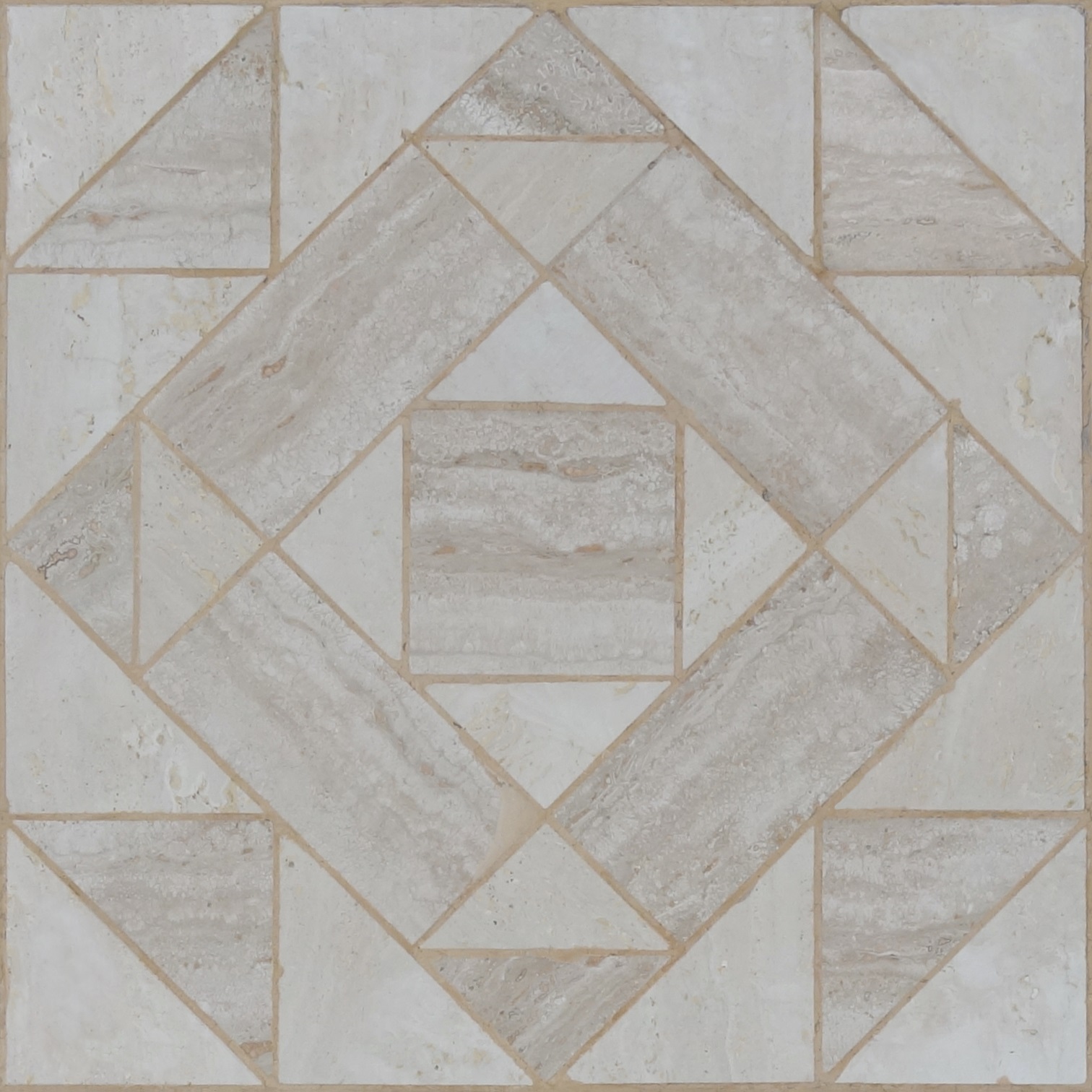
Sealing Marble Floors
Marble sealers are impregnating products — they penetrate the stone surface and line the pore structure with a water- and oil-repellent barrier without forming a topical film. A correctly applied sealer does not change the appearance of the marble (unlike topical coatings) but slows liquid absorption, giving time to clean up spills before they stain.
Sealer Types
Fluoropolymer-based impregnating sealers (also called "solvent-based" or "water-based" impregnators) are the standard for marble floors. Water-based formulations are lower-odour and more suitable for occupied residential spaces; solvent-based penetrate more deeply and are preferred for heavily used commercial areas.
Sealing interval for residential marble in Poland: typically every two to four years for low-traffic areas, annually for entranceways and kitchens. Test by placing a few drops of water on the sealed surface — if the water beads and does not darken the stone within 30 seconds, the sealer is still effective. If the stone darkens, resealing is due.
Application
- Ensure the marble surface is clean and dry — sealer applied over residue or moisture will not penetrate evenly.
- Apply sealer with a clean lint-free cloth or foam applicator in a thin, even layer.
- Allow penetration time as specified (typically 5–15 minutes) — do not let the sealer dry on the surface.
- Buff off excess with a clean cloth before the sealer dries. Dried sealer residue on the surface appears as haze and requires solvent removal.
- Apply a second coat after the first has cured (typically 30–60 minutes) for full protection.
Daily Cleaning Chemistry for Polish Marble
The most common damage to marble from cleaning is acid attack. Acidic products — vinegar, lemon-based cleaners, many tile cleaners with citric acid, and some descaling products — dissolve the calcium carbonate in marble, causing surface etching that appears as dull, rough patches. This damage cannot be cleaned away — it requires repolishing.
Correct cleaning products for marble floors:
- pH-neutral cleaners specifically formulated for natural stone — available from stone care product ranges.
- Heavily diluted neutral floor cleaner at maximum the manufacturer's recommended concentration — over-concentrated neutral cleaner leaves residue that dulls the finish.
- Plain warm water for routine damp mopping.
Hard water from Polish municipal supplies (Warsaw, Kraków, and other cities in limestone geology areas have notably hard water) leaves calcium deposits on marble after mopping if the water is not squeezed out of the mop adequately. Use a wrung-out mop rather than a wet one, and dry the floor with a clean cloth after mopping if limescale deposits are a recurring issue.
De-Icing Salt Damage
Marble near building entrances in Poland is at risk of de-icing salt damage. Sodium chloride and calcium magnesium acetate (the less damaging alternative de-icer) are tracked in on footwear during winter. The salt dissolves and is drawn into the marble pore structure as the floor warms. As it recrystallises, salt expansion damages the calcite crystal bonding at the surface — spalling and pitting result over multiple winters.
Prevention: barrier matting at entrances large enough that foot traffic completes at least three full steps before reaching the marble. Regular mopping of the entrance zone during and after salt application periods. Sealing the entrance marble more frequently than interior areas.
When Re-polishing Is Needed
The most common triggers for re-polishing marble floors:
- Acid etching — dull patches from acidic contact. These require mechanical repolishing from the appropriate grit to remove the damaged surface layer.
- Traffic scratching — fine scratch network visible in reflected light. Light scratching responds to the paste polishing stage or spray crystallisation without full grit sequence. Deep scratching requires starting from 400 or coarser grit.
- Lippage development — height differences between tiles caused by sub-floor movement. This requires grinding from 50 grit to flatten the surface before the polishing sequence.
- Sealer build-up — old sealers that have degraded and formed a cloudy layer on the surface. Requires a sealer stripper specific to the sealer type before any mechanical work.
External Reference
The marble polishing section on Wikipedia covers the historical and industrial context of marble surface finishing. The Marble Institute of America (MIA+BSI) publishes technical care and maintenance guides for natural stone that are freely available on their website and referenced by Polish stone care professionals.